
When I first got into 3D printing, I thought I needed more printer upgrades to get better results. Better hotend, better bed, better filament. What I didn't expect was that one of my most-used tools would be something that doesn't touch the printer at all—a heat gun.
It turns out that controlled heat solves a lot of problems in this hobby. From fixing warped prints to installing threaded inserts, from bending plastic to smoothing surfaces, a good heat gun has become as essential to my workflow as my flush cutters.
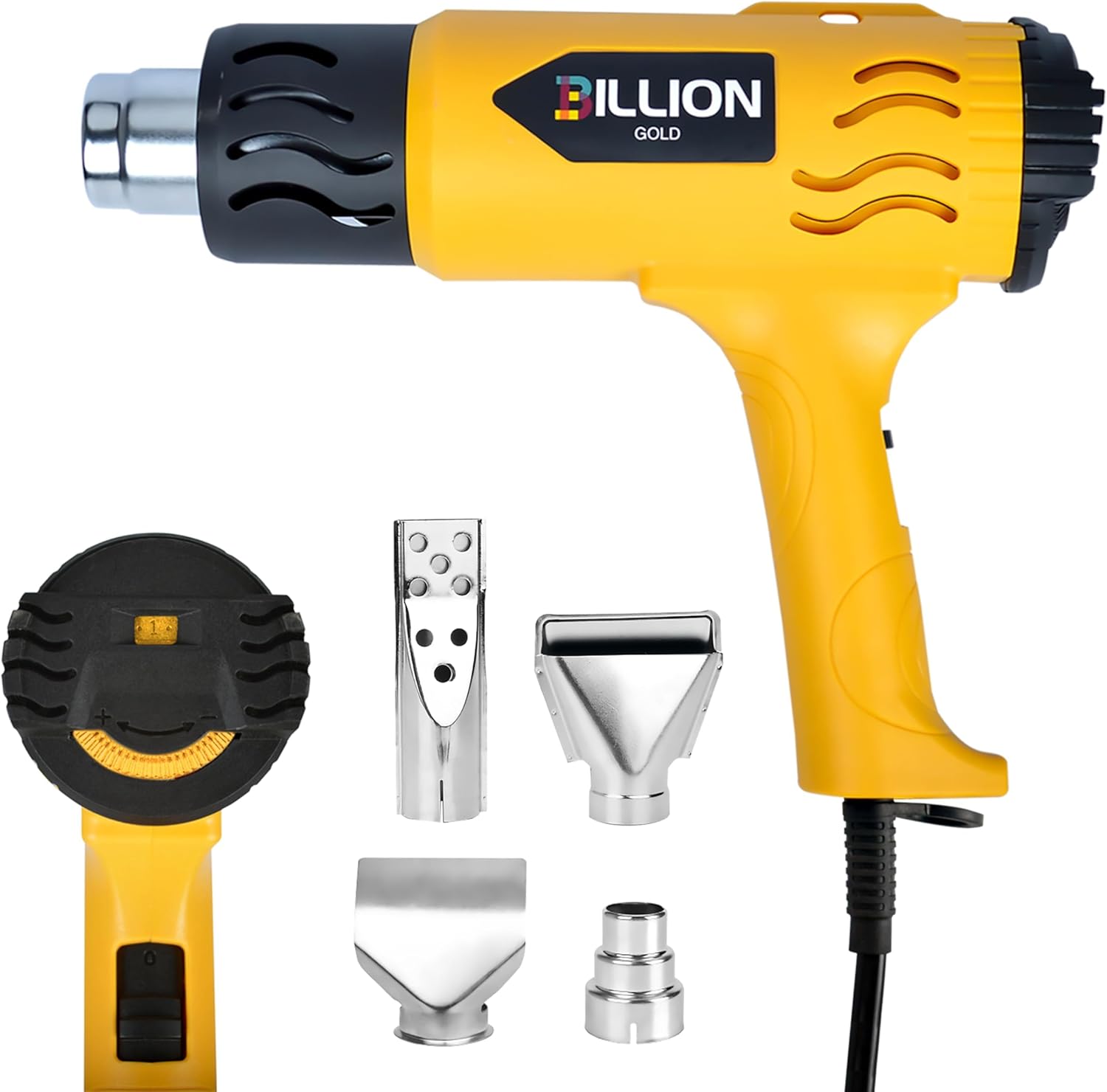
Why a Heat Gun for 3D Printing?
3D printing is fundamentally about melting plastic, so it makes sense that many post-processing and assembly tasks also involve heat. A heat gun gives you precise, targeted heat application that a hair dryer can't match and an open flame would destroy.
The 1800W heat gun I use has variable temperature control from 120°F all the way up to 1200°F, which covers everything from gentle warming to serious plastic manipulation. The dual-mode airflow means I can dial in exactly what each job needs.
Here's how I actually use it:
1. Bending and Shaping Printed Parts
Sometimes you need a part to curve or flex in a way that's difficult to print. Instead of fighting with supports and overhangs, I'll print a simpler flat version and then heat-form it to shape.
The variable temperature control on this heat gun is crucial here. PLA softens around 140-160°F, while PETG needs more heat. Being able to dial in the exact temperature means I can soften the plastic without melting it into a blob.
2. Removing Stubborn Supports
Sometimes supports fuse too well to the print, especially with PETG. A quick pass with the heat gun on low softens the support interface just enough to peel it away cleanly without damaging the surface underneath. This is way better than gouging at it with pliers and leaving marks.
3. Smoothing and Surface Finishing
While it won't give you the glossy finish of an acetone vapor bath on ABS, a heat gun can soften the outer surface just enough to reduce layer line visibility. The key is quick passes at the right distance—you're gently melting the peaks of the layer lines without distorting the part.
This takes practice, and I'd recommend testing on failed prints first. But once you get the technique down, it's a quick way to improve the appearance of visible surfaces.
4. Shrink Tubing for Wiring Projects
If you're building enclosures, custom cables, or electronics housings for your printer, heat shrink tubing is essential. The heat gun handles this perfectly. Mode I with the lower airflow setting gives you controlled shrinking without melting nearby components.
Why This Heat Gun Specifically?
I went through a couple of cheap heat guns before landing on a proper variable-temperature model. Here's what matters for 3D printing work:
Wide temperature range (120°F - 1200°F) – PLA, PETG, ABS, and ASA all have different glass transition temperatures. Being able to dial in exactly what you need prevents disasters.
Dual airflow modes – The 300 L/min setting is gentle enough for delicate work; 500 L/min moves more heat for bigger jobs.
1800W power – Heats up in seconds. When you're in the middle of a project, waiting for tools to warm up is frustrating.
Hands-free stand – This is huge. The integrated stand lets you set the heat gun upright and use both hands on your work. Essential for tasks like heat-forming parts over a mold.
Four nozzles included – The concentrator nozzle focuses heat on small areas; the wide nozzles spread it for larger surfaces. Different jobs need different heat patterns.
Ergonomic grip – If you're doing a lot of heat-set inserts or working on a big project, comfort matters.
Safety Notes
A few important things to keep in mind:
- Ventilation matters. Heating plastic releases fumes. Work in a ventilated area or use a fume extractor.
- Start with lower temps. You can always add more heat; you can't un-melt plastic.
- Keep it moving. Don't hold the heat gun stationary on one spot—keep it in motion to distribute heat evenly.
- Cool-down procedure. The manufacturer notes you should switch from Mode II to Mode I before turning off, letting internal heat dissipate. This protects the heating element long-term.
The Bottom Line
A quality heat gun is one of those tools that seems unnecessary until you have one—then you wonder how you ever managed without it. For the price of a few spools of filament, you get a tool that fixes problems, enables new techniques, and makes post-processing faster and easier.
If you're still trying to bend prints with a hair dryer or fix warps by "just reprinting it," give a heat gun a shot. Your workflow will thank you.